






Information Centre
Articles on diagnosis, treatment and recovery, written by the team who carry out the surgery.
25 articles in Testing & Diagnosis · page 2 of 3
 Testing & DiagnosisWhat to ask during a prostate cancer consultationFacing a prostate cancer diagnosis can feel overwhelming, but asking the right questions, and getting clear, honest answers, can turn anxiety into clarity. Below you’ll find a practical checklist to guide your consultation and help you make informed decisions. Each question is followed by a brief explanation of what you might expect in response,…Read article
 Testing & DiagnosisProstate cancer treatment options: Comparing radiotherapy and surgeryMany men diagnosed with localised prostate cancer find themselves weighing surgery or radiotherapy for prostate cancer control. Both can cure the disease, yet their routes to that goal look and feel distinctly different. This guide distils the essentials, blending recent UK and international evidence with insights from Santis Health, one of the UK’s leading centres…Read article
 Testing & DiagnosisPreparing for your robotic radical prostatectomy: Expert tips from Professor Christopher EdenA diagnosis of prostate cancer can be overwhelming, but understanding what to expect and how to prepare for prostate surgery can help you feel more confident and in control. At Santis Health, we believe preparation is key to both surgical success and a smoother recovery. Professor Christopher Eden, the UK’s most experienced prostate cancer…Read article
 Testing & DiagnosisThe role of exercise in prostate cancer prevention and recoveryProstate cancer remains one of the most common cancers diagnosed in men, with thousands of new cases reported every year. It is a condition that affects the prostate gland, which is part of the male reproductive system. Prostate cancer can have a significant impact on a man’s health, often leading to a combination of…Read article
 Testing & DiagnosisProstate cancer: Diet and lifestyle tips for menProstate cancer is one of the most common cancers among men, but research increasingly suggests that diet and lifestyle choices can play a significant role in both reducing risk and supporting treatment outcomes. While no single diet can cure prostate cancer, evidence shows that nutrition can influence cancer progression and recovery. By adopting a…Read article
 Testing & DiagnosisWhat is a PSA test and when should you get one?Prostate cancer is one of the most common cancers among men, and early detection is key to improving outcomes. A Prostate-Specific Antigen (PSA) test is one of the primary screening tools used to assess the health of the prostate. The PSA test measures the amount of PSA, a protein produced by both cancerous and…Read article
 Testing & Diagnosis9 common questions about prostate cancerProstate cancer remains a significant concern for men, yet many uncertainties surround it. From hereditary risks to advanced treatment options, understanding this disease is crucial for early detection and effective management. Here, we address frequently asked questions about prostate cancer, offering clear and practical insights to empower men to take charge of their health….Read article
 Testing & DiagnosisWhat to expect after a prostate cancer diagnosisReceiving a prostate cancer diagnosis can be an overwhelming experience. It’s natural to feel a whirlwind of emotions – anxiety, confusion, and fear. But alongside these emotions, there’s something critically important: hope. Understanding your diagnosis, what lies ahead, and the resources available to you can make all the difference in how you navigate this…Read article
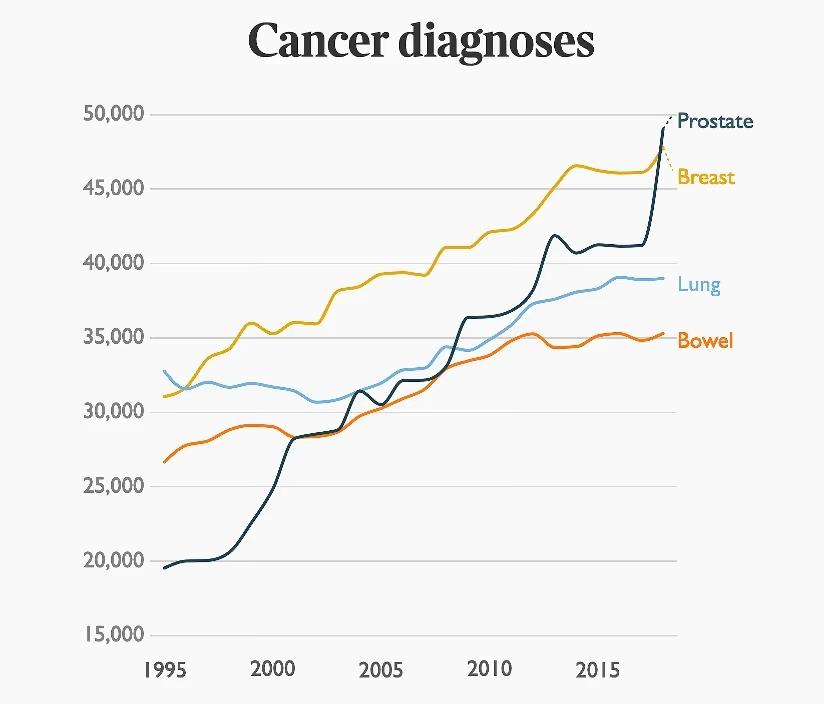 Testing & DiagnosisThe importance of celebrities in increasing the awareness of prostate cancerIn 2014 the number of men dying of prostate cancer overtook that of women dying of breast cancer, yet there remains no screening program for prostate cancer despite women having been screened for breast cancer since 1998. The press regularly reports that PSA is too inaccurate for use as a screening tool, despite contrary…Read article
 Testing & DiagnosisHow to reduce your risk of dying of prostate cancer if you have an increased genetic riskLike breast and bowel cancer (the most famous forms as well as many other cancers), it is now well understood that there is a strong genetic element to a man’s risk of developing prostate cancer. For example, if your father had prostate cancer, then you are more likely to develop it too. It’s important…Read article
 Testing & DiagnosisWhat extra steps should I take if I have a family history of prostate cancer?Risk factors for prostate (and any other cancer) can be divided into genetic and environmental. Although you can’t change the genes that you were born with, it’s important that if you have a family history of prostate cancer you understand that your risk of getting prostate cancer is 2-3x higher if you have a…Read article
 Testing & DiagnosisTransrectal or transperineal prostate biopsy: which is best?Introduction As enlightened readers of the Prostate Cancer Information Centre will know by now, the PSA test on its own cannot tell us if a patient has prostate cancer (many patients with prostate cancer in fact do not have an abnormal PSA level) – it is only an indicator, although generally a reliable one….Read article